%20(1).png)
Best things to do in Vancouver, Canada
Updated: Mar 4

Contents
1. Introduction
We lived in Vancouver for 9 years and in September 2025 went back and spent 11 days there. It had been over 20 years since our last visit. Friends had warned us that Vancouver had changed a lot and about the drug problems in the downtown area.
I was pleased to find that many of the changes in Vancouver were for the better. Much of False Creek and Coal Harbour used to be an industrial wasteland but these areas have now been developed well. As a result you can now walk or cycle for hours along Vancouver's seafront on dedicated cycle lanes and walkways.
There is certainly a big drug and homelessness problem in Vancouver. It isn't very evident in the main area of interest for visitors which is north of Granville Street. However, it is noticeable south of Granville Street and the areas around Gastown and China Town can be impacted. Safety in downtown Vancouver isn't really an issue but I would be very careful walking south of Granville Street at night.
We were really impressed with Vancouver although it helped that we had excellent weather. Vancouver does tend to have good summer weather but the wet winters are another matter!
There is enough to do and see in Vancouver to justify spending at least 2 whole days there. The main places of interest for visitors are Stanley Park, Granville Island market, Grouse Mountain and the downtown area.
You can easily spend more days in Vancouver, particularly if you explore some of the outlying areas. There are several very scenic lakes with good beaches within driving distance. There is also the Sea to Sky highway to Whistler with several sights along the way.
Information on Vancouver's main sights and activities is provided below. After staying in Vancouver we did a 3 week road trip through British Columbia to the Canadian Rockies - see my blog.
2. Walking or Cycling around Stanley Park

Stanley Park's main attraction is the 9 kilometre long sea wall that runs from Coal Harbour to English Bay. From the sea wall there are great views of the North Shore mountains, downtown Vancouver's skyline, English Bay and Coal Harbour.
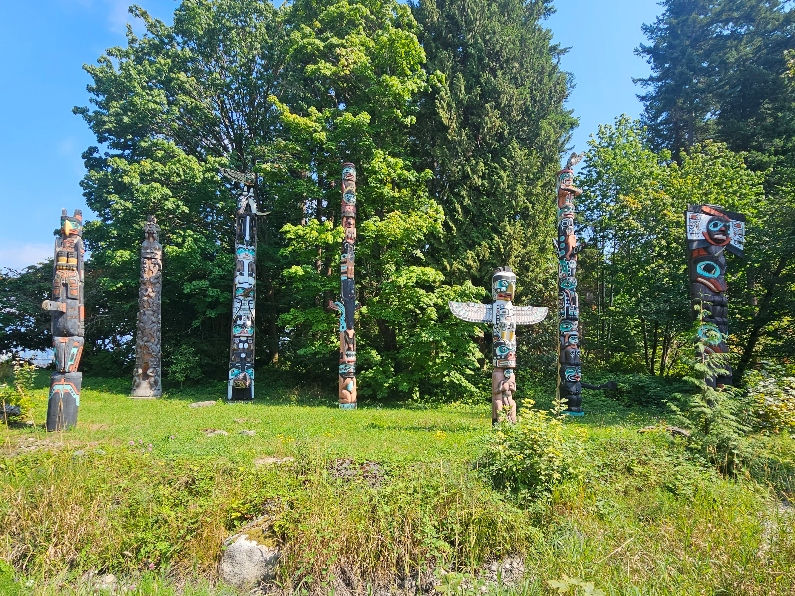
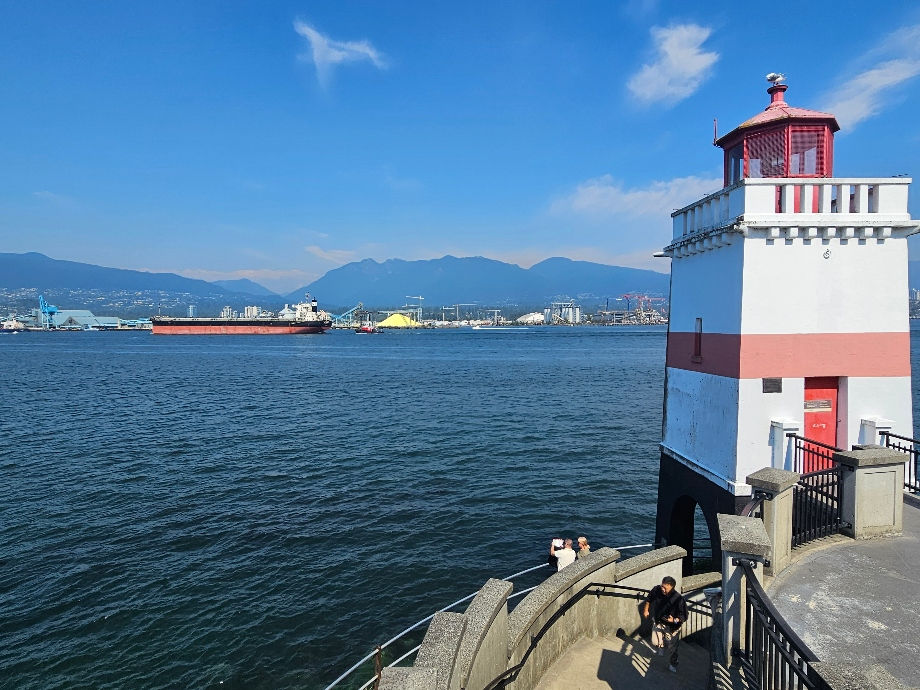
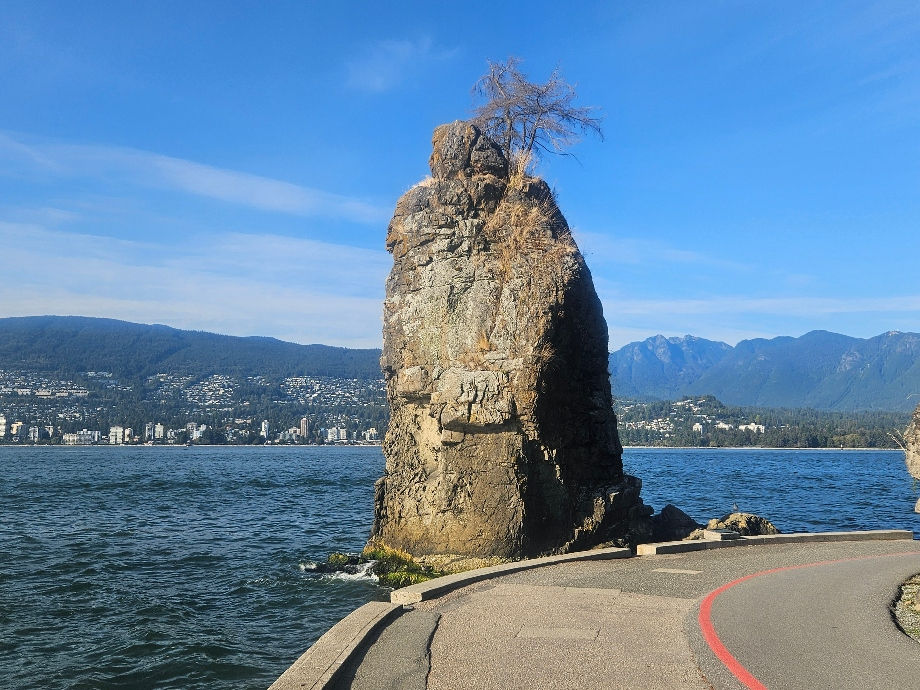
From the sea wall sea planes can be seen taking off and landing. Cruise ships and freight vessels often sail by. There are several points of interest along the sea wall which include the Totem Poles, Brockton Point, Prospect Point, Siwash rock, Second Beach and Third Beach.
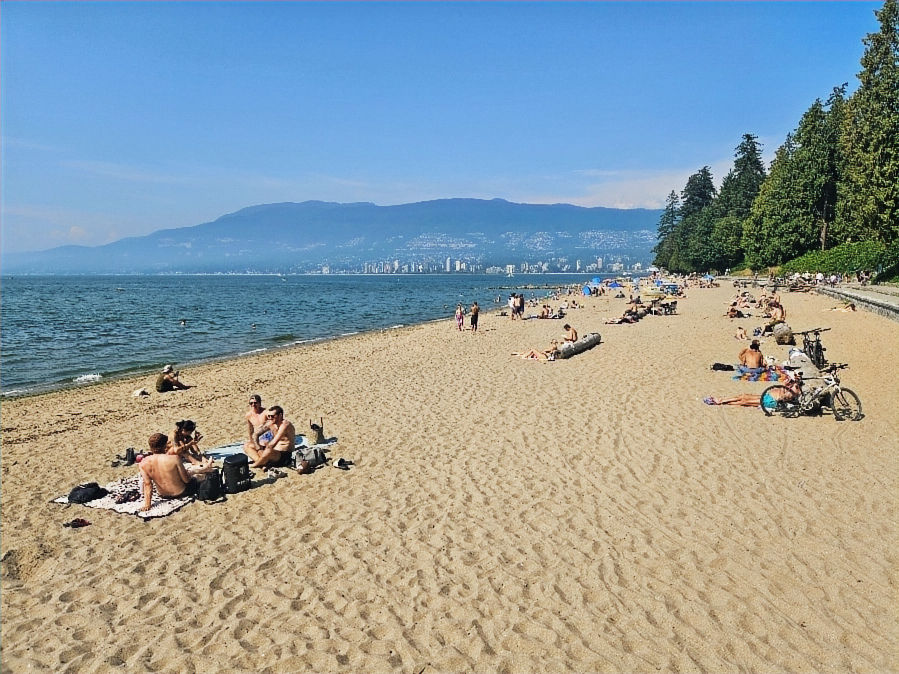
Third Beach is an excellent spacious and sandy beach. Second Beach isn't quite as nice but there is a popular outdoor swimming pool there. Vancouver's aquarium is in Stanley Park but I didn't visit it. See the aquarium's website for details.
If you want to walk around Stanley Park, but feel that 9 kilometres is too long, there is a way of shortening it by a couple of kilometres. On the east side of Stanley Park you can cut across the peninsular by Brockton Point. There is a paved path between the starting area for the horse drawn carriages and Lumberman's Arch. This path passes to the west of the aquarium.
Cycling is a popular and fun way to see Stanley Park and there is a designated bike path around Stanley Park. It's a one way bike path and everyone must cycle anti clockwise.
Mobi operates a bike sharing scheme but it is expensive at $1 for unlocking the bike and then 29 cents a minute. In comparison the bike share in Toronto only costs 12 cents a minute.
It is better to rent a bike from one of the many bike rental stores on Denman Street near the intersection with West Georgia Street. I used Spokes which is probably the largest bike rental store in Vancouver. It was very easy to rent a bike and they provided a helmet and bike chain.
I cycled around Stanley Park twice and walked once. It's also possible to drive around and I also did that. It was the only time that I visited Prospect Point viewpoint which is high up above the sea wall. Prospect Point viewpoint is near Lions Gate Bridge and there are excellent views of ships passing under the bridge.
The interior of Stanley Park is massive but most of it is dense forest. The exceptions are the Lost Lagoon and the area around the aquarium.




3. Historic Gas Town
Gastown is the oldest part of Vancouver and one building dates back to 1887. The buildings aren't very special when compared to historic buildings in European towns. However, it's good that the area has been preserved and it's pleasant to stroll down Water Street, which is Gastown's main street.
Gastown's main attraction is the steam clock which looks old but was actually only made in 1977. It's meant to whistle and shoot steam every quarter of an hour. When I was there the time on the clock was wrong and some visitors had been waiting a long time for it to whistle. It finally whistled just as I was about to leave.
I was surprised that there are now some upmarket businesses in Gastown. Unfortunately they aren't of interest to visitors. There are a couple of shops that sell the usual tourist junk that has been made in China. Many years ago they used to sell quality native handicrafts but not any more.
I saw a couple of comments on Tripadvisor about problems of homelessness and drug use in Gastown. Although Gastown is south of Granville Street I didn't experience such issues.

4. Yaletown
Yaletown used to be the western terminus of the Canadian Pacific railway. The warehouses on Hamilton Street and Mainland Street were transformed after Expo 1986 into restaurants, shops, offices and apartments. The entire area has been gentrified with high rise apartment towers built on the nearby north shore of False Creek.
The 2 main streets in Yaletown are usually very quiet during the daytime but liven up in the evenings. Some visitors have reported on Tripadvisor that there isn't much to do in the daytime.
The nearby False Creek waterfront is a real pleasure with its pedestrian walkway and cycle path. From there it is easy to take one of the frequent water taxis along False Creek and to Granville Island market.
Opposite the Yaletown Sky Train station is the old railway roundhouse. There is a small museum there which is free to enter.
The museum's main exhibit is the first locomotive to haul a trans continental passenger train into Vancouver in 1888. There is also an interesting exhibit about the Chinese workers who helped construct the trans continental railway.


5. Cycling Route around Vancouver

As I had hurt my foot I hired an electric bike from Spokes Bicycle Rentals and spent the day cycling along Vancouver's fantastic cycle paths. It was one of the best days of my 38 day holiday in Canada.
I started near Coal Harbour and cut across the southern edge of Stanley Park to reach English Bay. From there I cycled to Burrard bridge and crossed over to Vanier Park.
After Vanier park I rode past Kitsilano beach, Jericho beach, Locarno beach and Spanish Banks. They are all excellent wide and sandy beaches.
I turned round shortly after Spanish Banks and retraced my route. Instead of crossing the Burrard bridge back to downtown Vancouver I continued cycling along the south shore of False Creek. I stopped at Granville Island Market for lunch.
When I reached the end of False Creek there were great views of the futuristic Science World dome, BC Place Stadium and the Rogers Centre. From there I cycled along False Creek's north shore back to English Bay and retraced my route through Stanley Park to Spokes Bicycle Rental.
I changed bikes there as the battery was becoming a bit low and then cycled around Stanley Park.
I paid $93 for the day's rental and it was worth every cent. A manual bike would have been about $40 less but I did enjoy the ease of riding an electric bike for the distance I covered. It was totally worth it and it's the best way of seeing the area.




6. Granville Island Market
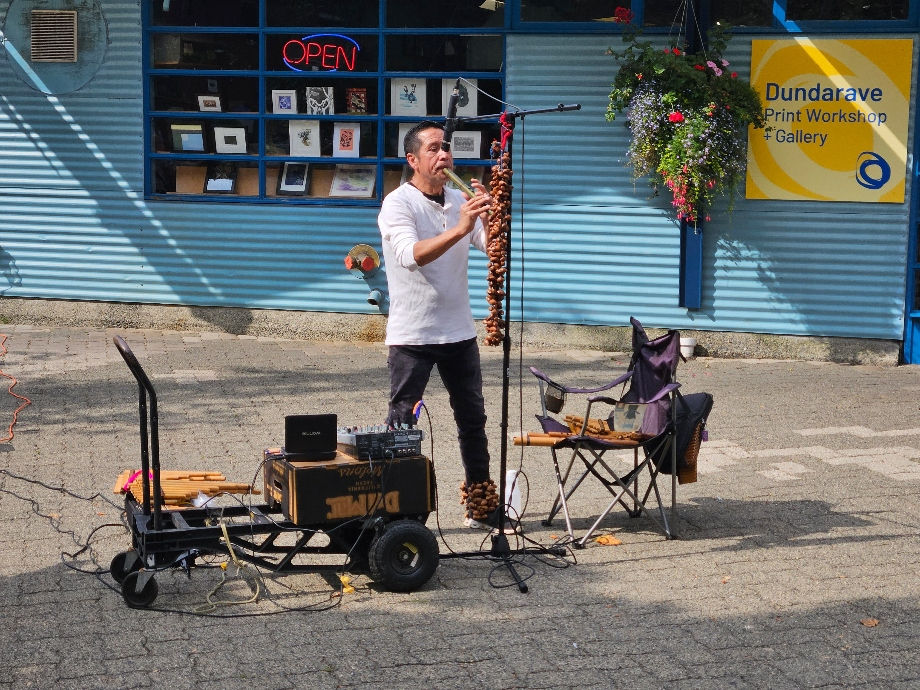
Granville Island is one of the most popular places in Vancouver for visitors. The main attraction is the large indoor market. Granville Island Market is a great place to buy produce and have lunch or a snack. You can either eat inside or at the picnic tables by False Creek. There is often a musician playing there.
Granville Island Market is only a small part of Granville Island and there are lots of shops and restaurants on the island. It's very pleasant wandering around. The indoor market is open 7 days a week from 09.00 to 18.00.
The best and nicest way to reach Granville Island from downtown is by one of the very frequent water taxis. Aquabus and False Creek Ferries both operate water taxis on False Creek.
The water taxis serve the entire False Creek area from Vanier Park in the west to Science World in the east. The fares are reasonable and there are great views along the way.




7. Coal Harbour, Vancouver
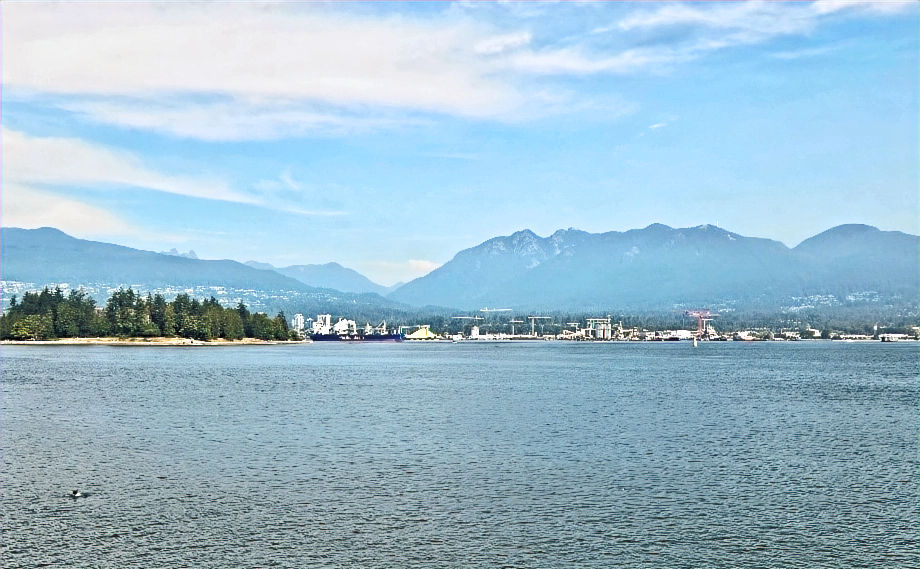
Coal Harbour runs from the Cruise Ship Terminal in downtown Vancouver to Stanley Park. Prior to 1995 the southern part of Coal Harbour's waterfront was occupied by Canadian Pacific Railways and it wasn't a very attractive area.
Since then Coal Harbour has been developed well and the railway tracks no longer exist. There is a wide walkway all the way from Stanley Park to the Cruise Ship Terminal. There are are excellent views to Stanley Park and over to North Vancouver and the north shore's mountains.
The sea plane terminal is located at Coal Harbour and it's fascinating watching, and hearing, them take off and land. Coal Harbour isn't used by freight vessels but is frequented by pleasure boats, cruise ships and ferries to places like Nanaimo on Vancouver Island.
There are many interesting information plaques along the walkway about historical events in Vancouver and British Columbia.



8. Best Beaches in Vancouver
Vancouver has several good sandy beaches that can be easily accessed by visitors.
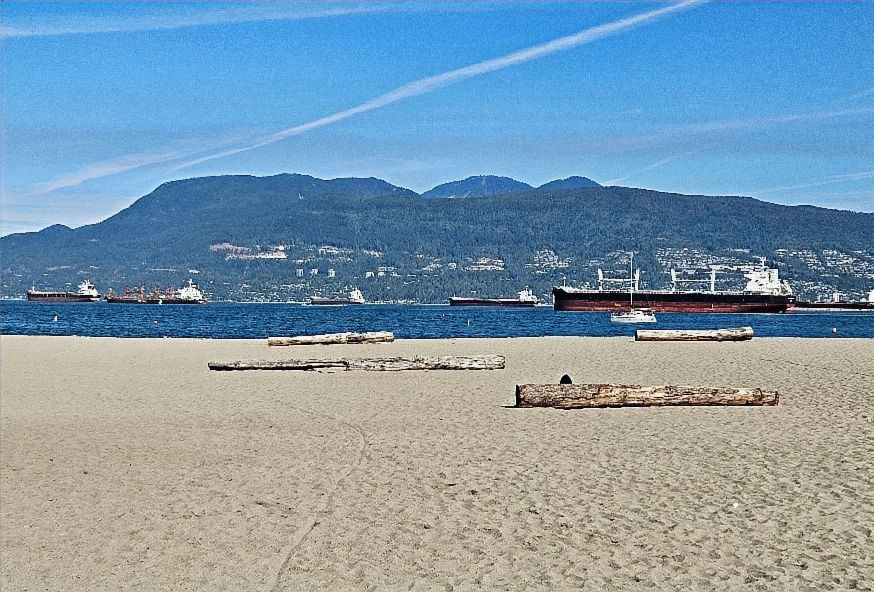
The closest beach to downtown Vancouver is First Beach which is at the western end of Denman Street. It's an excellent wide and sandy beach with logs to rest on. Third Beach on the western side of Stanley Park is very similar but not quite as accessible.
To the south of English Bay there are excellent sandy beaches from Kitsilano to Spanish Banks. In between these 2 beaches are Locarno Beach and Jericho Beach. There is convenient paid parking at all these beaches.
There are outdoor pools at Kitsilano and 2nd Beach in Stanley Park.

9. The Main Shopping Steets of Downtown Vancouver
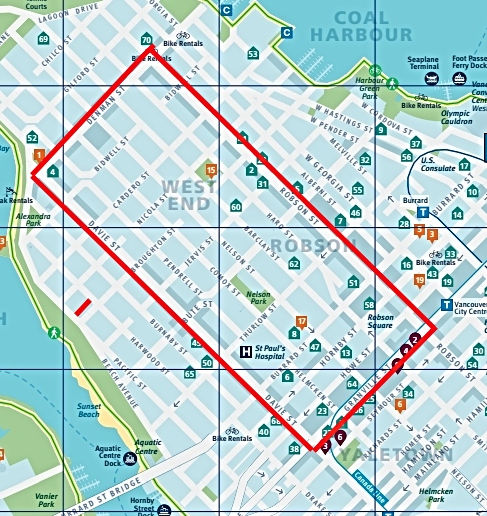
The streets with the most activity in downtown Vancouver are Robson Street, Denman Street, Davie Street and Granville Street. They can be seen by doing an interesting circular walk.
Robson Street is my favourite street in Vancouver and it's lined with shops and some of them are exclusive. Robson Street slopes down to Denman Street which has lots of reasonably priced restaurants. Both Robson and Denman Streets are safe and very pleasant to walk around at night time.
Davie Street runs parallel to Robson Street. Many years ago Davie Street had a notorious reputation but it has now been cleaned up. There are shops and restaurants along Davie Street but it isn't as busy as Robson and Denman Streets.
Davie Street becomes more vibrant nearer the junction with Granville Street. I enjoy walking along Davie Street in the daytime. It isn't particularly interesting at night time and also a bit rough near Granville Street.
Granville Street is probably the main street in downtown Vancouver but not the most pleasant one. There are shops, cheap eateries, bars and night entertainment. Unfortunately there are also homeless people and drug users, particularly as you get closer to the intersection with Davie Street.
It's worth wandering along Granville Street but watch where you step! The street comes alive at night time with all the neon lights. At night time it becomes a bit rough near Davie Street. At the junction of Granville and Robson there is access to the underground Pacific Centre shopping mall.
It's probably about a 2 hour circular walk. It's likely to take much longer with stop offs for food, drink, shopping etc.
10. Museum of Anthropology
The Museum of Anthropology is at the University of British Columbia and is about a 30 minute drive from downtown Vancouver. There is parking at the museum which costs about $4 an hour. The museum can also be accessed by bus.
The Museum of Anthropology is housed in a spectacular building designed by the renowned Canadian architect Arthur Erickson. It's open from 10.00 to 17.00 each day and the entry fee is $26 for an adult and there are discounts for seniors and children.
The Museum of Anthropology mainly receives very good reviews but some reviewers complain about the lack of information about the artifacts, history and culture of the indigenous population.
I thought that the building was very impressive but was disappointed with the actual museum. There are masses of artifacts with no meaningful narrations. I wanted to learn about Canada's indigenous population, and their history, but that wasn't covered.
Some reviewers said they spent several hours in the Museum of Anthropology but we spent just over an hour there. We didn't learn any more by paying to visit the museum than if we had freely walked around the exterior of the museum and peered through the huge glass windows.
We were also disappointed with the museum's shop. The museum displayed so much indigenous handicrafts but very little was for sale in the shop. Most of the items for sale were the usual tourist tat.


11. Grouse Mountain
Grouse Mountain is one of the top visitor attractions in Vancouver. I didn't take the gondola up this visit as I had skied at Grouse Mountain many times in the past and didn't want to pay the admission fee.
The views from Grouse Mountain are fantastic if the weather is good. I personally wouldn't spend the money to go up if it was cloudy or there was smoke from wild fires like I experienced in early September.
There are many free and paid activities at the top of Grouse Mountain. Most visitors enjoy the ranger and owl talks, the grizzly bear habitat and the lumberjack show. These activities are all free but be aware that outside the peak summer season the lumberjack show is only at weekends and holidays.
The online entrance fee is $82 with discounts for seniors and children. Online tickets cannot be bought on the day of admission. Tickets can be bought at Grouse Mountain and Canada Place but cost a bit more.
During the summer season there is a free coach service between Canada Place and Grouse Mountain. Coaches run about every half an hour from 09.00 to 18.00.
It's also possible to hike up Grouse Mountain and take the gondola down at a reduced fee. The hike up is called the Grouse Grind and it has an elevation gain of 800 metres. Grouse Mountain states that it takes 2 to 2.5 hours on average. However, many people hike up faster.
I did the Grouse Grind many years ago. The hike is completely through forest and there aren't any views before the top. The only reasons to do the Grouse Grind are the challenge, fitness and to save a bit of money.
12. Capilano Suspension Bridge
Capilano Suspension Bridge was free when I visited a very long time ago. Since then I have crossed numerous spectacular suspension bridges in the Himalayas for free. Therefore when I saw that the entrance fee for the Capilano Suspension Bridge was an outrageous $78 I decided not to visit.
There are other activities included in the entrance fee and there is a free shuttle from Canada Place. However, if you drive there is a charge for parking.
I feel that Capilano Suspension Bridge is an expensive tourist trap. Surprisingly there are a lot of positive reviews on Tripadvisor.
If you want to experience walking over a suspension bridge it is better to visit the nearby Lynn Valley Canyon Park which has free entry.
13. Queen Elizabeth Park
Queen Elizabeth Park is a 130 acre municipal park that's free to enter. The main attractions are in the centre of the park where there were 2 quarries. The quarries have been turned into very spectacular gardens. There are also good views of Vancouver's skyline and the North Shore mountains from Queen Elizabeth Park.
The Bloedel Conservatory is near the quarry gardens and it consists of a glass domed building housing a botanical garden. The entrance fee is $9 with discounts for seniors and children.
Queen Elizabeth Park is a 15 minute drive from downtown Vancouver.


14. Deep Cove
Deep Cove is on the eastern side of North Vancouver and is a 30 minute drive from downtown Vancouver. Parking at Deep Cove is very limited at weekends and holidays so we went by Uber.
Deep Cove is on Indian Arm which is a tributary of Burrard Inlet. The water is usually calm and is popular for boating and canoeing. Canoes can be rented at Deep Cove.
There are a few small beaches and also open parkland at the waterfront. It's a pleasant place to wander around. Deep Cove has a small high street with a few restaurants and shops


15. Golden Ears Provincial Park
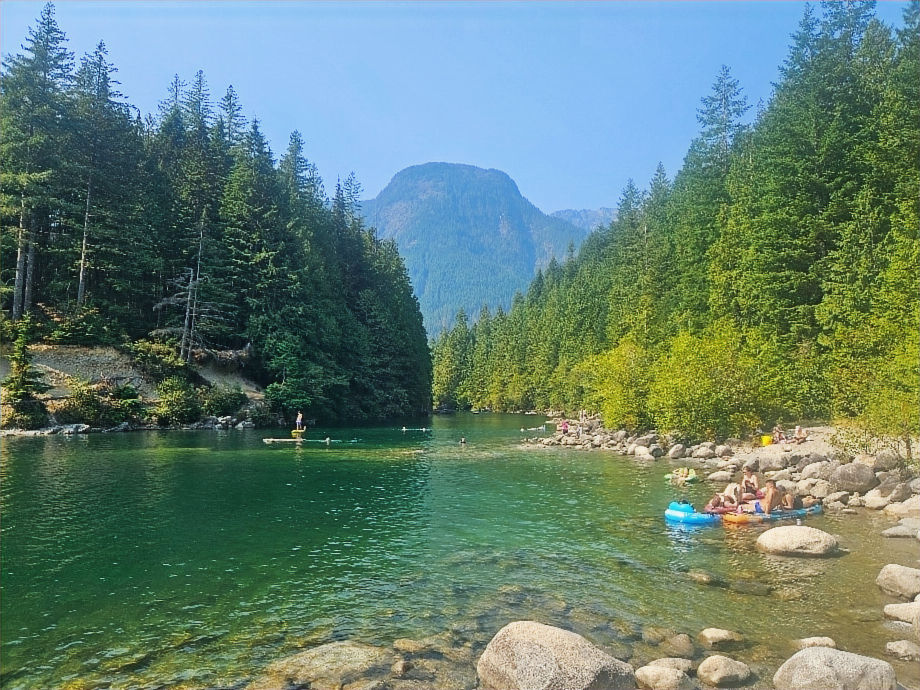
Golden Ears Provincial Park used to be one of our favourite places to go to for swimming when we lived in Vancouver. It has a large pristine lake surrounded by mountains and the water temperature is fine as the lake isn't glacier fed.
It's a one hour drive eastwards from Vancouver. Unfortunately with Vancouver's expanded population Golden Ears Provincial Park is now very popular. In peak summer time a day pass is required up to the beginning of September.
Day passes for Golden Ears Provincial Park are free and can be applied for online 2 days in advance. It's better to avoid weekends and holidays.
There are 3 main areas at the lake for swimming. South Beach is the first beach off the access road and it's the nicest and largest beach. It has a large grassy picnic area by the beach and there are good toilet facilities.
Further along the access road there is parking for Gold Creek and North Beach. It's a one kilometre walk along Gold Creek to North Beach. The first part of Gold Creek is too shallow for swimming but nearer the lake it's deeper and is a popular swimming spot.
The North Beach area is very scenic but the beach is stony and the water too shallow for swimming. It's popular with dog owners as dogs aren't allowed on South Beach.


16. Buntzen Lake
Buntzen Lake is 45 minute drive eastwards from downtown Vancouver. It's similar to Golden Ears Provincial Park but there is only one beach accessible by vehicles. From the middle of May to beginning of September a free permit must be obtained online from BC Hydro.

17. Sea to Sky Highway from Vancouver to Whistler
We drove the Sea to Sky Highway from Vancouver to Whistler in mid September and weren't as impressed with the scenery as we thought we would be. It didn't help that it was a bit cloudy. Unfortunately trees frequently block the views from the highway which is a common problem in British Columbia.
Whistler is a pleasant destination to visit but if you are visiting outside the main summer season do check before you go that the gondolas and peak chairlift are open. See my section on Whistler for further information about that.
It only takes 1.5 hours to drive on the Sea to Sky Highway from downtown Vancouver to Whistler. Most visitors take a lot longer as there are a few places worth visiting on the way. Information about the main stops is provided below.
Porteau Cove Provincial Park
Porteau Cove Provincial Park is a 35 minute drive from downtown Vancouver. There's free parking and a picnic area just off the highway. On a clear day there are good views of Howe Sound and the coastal mountains.


Britannia Mine Museum
The Britannia Mine operated from 1904 to 1974. At one time it was the largest copper mine in the British Commonwealth and it supplied 17% of the world's copper.
On the hillside above the Britannia Mine there is a 20 storey building that was used for processing the copper ore. The exterior looked more impressive before they renovated it in 2007. The interior hasn't been renovated and is very impressive. As a result it's a popular filming location.
The $42 entrance fee for the Britannia Mine Museum includes a 75 minute guided tour with an underground train ride. You should allow at least 2 hours for a visit. The Britannia Mine Museum is a 45 minute drive from downtown Vancouver.
We visited about 20 years ago and enjoyed it. Most of the reviews are very positive but some visitors feel that it isn't worth the $42 entrance fee. In the peak summer period it's advisable to make an online reservation as the Britannia Mining Museum can be fully booked.


Shannon Falls
Shannon falls is only a 7 minute drive north of Britannia Mine Museum and is a popular stop. There's a free car park and flush toilets.
It's a 350 metre walk along a good path to the main viewpoint of the falls. There's another viewpoint a bit further up but we didn't walk there.
After seeing several spectacular waterfalls in Banff National Park I wasn't so impressed with Shannon Falls. We visited in mid September after several dry months. Shannon Falls is more impressive in winter and spring.

Brandywine Falls
Brandywine Falls is a 1.25 hour drive from Vancouver. There's free parking but the car park can be very busy at weekends. It's a 10 minute walk to the falls and there are 2 viewing areas.

Whistler
Hikers and mountain bikers could spend days at Whistler in the summer time. Visitors not participating in outdoor pursuits can easily keep themselves fully occupied for a day.
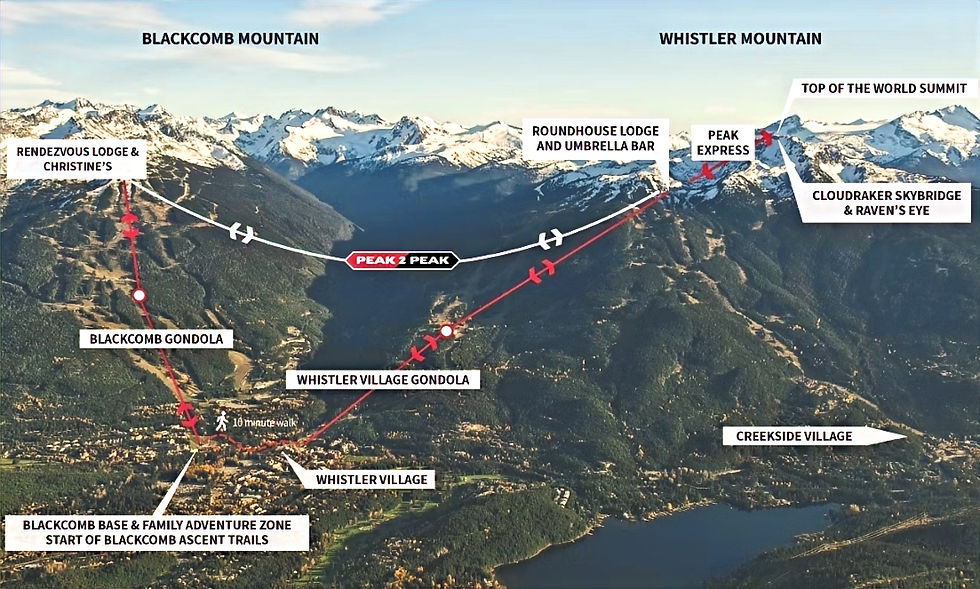
The top activity is taking the gondola: there is a gondola up Whistler and another up Blackcomb. The Peak 2 Peak gondola connects the upper stations of the Whistler and Blackcomb gondolas and spans 4.4 kilometres.
The Peak Express chairlift goes from the upper station of Whistler's gondola to the top of Whistler Mountain (2,181 metres). This saves a one hour hike up and provides access to the Cloudraker Skybridge. This is a 130 metre bridge between Whistler Peak and West Ridge.
Tickets cost around $100 and covers the 3 gondolas, the Peak Express chairlift and the Cloudraker Skybridge. Before buying tickets check online as to what is open. During the peak summer period from mid June to Labour day all of these attractions should be open. However, at other times they may only be open at weekends or only some of the attractions may be open.
I discovered that after Labour day only the Blackcomb and Peak 2 Peak gondolas were open and even these gondolas stopped operating after 21st September. It seemed a rip off that the full price was being charged when the Peak Express chairlift to the Cloudraker Skybridge was closed.
There are a couple of attractive lakes at Whistler. Lost lake is the nearest to the centre of Whistler. In summer the water temperature is warm enough for swimming. Green Lake is a bit further north. It is larger and the water isn't as warm as it's glacier fed.


18. Squamish Loggers Sports Festival
The Squamish Loggers Sports Festival is the largest and best loggers festival in Canada. It has a fantastic action packed show highlighting the skills of British Columbia's loggers. Be prepared for the noise of the chain saws!
The Loggers Festival is normally held on a weekend at the end of July or start of August. The main show is on the Sunday and tickets should be booked early online as this show sells out. Squamish is a 50 minute drive from Vancouver along the Sea to Sky Highway.
19. Hotels in Vancouver
Hotel rooms are very expensive in Vancouver during the summer season. In 2025 a decent hotel room cost around $400 a night. Staying outside of downtown Vancouver saves very little. We spent a few nights in the Holiday Inn Express in Metrotown, Burnaby and even that cost $400 a night.
Hotel costs are high as Vancouver is a major cruise ship terminal for Alaska cruises. Also British Columbia has placed restrictions on the short term rental of apartments.
We initially rented a 2 bedroom apartment near the Rogers Centre as our son was with us. This cost a whopping $850 a night through VRBO. It was a nice apartment and it should have been for the price!
We then stayed at the Holiday Inn Express in Metrotown, Burnaby as we wanted to visit some areas outside the downtown core. I booked directly with Holiday Inn as they had a better deal than Booking.com.
The Holiday Inn Express in Metrotown, Burnaby was very good and included breakfast and free parking. It was right next to the huge Metrotown shopping centre and opposite the Skytrain station. It only took about 20 minutes to reach downtown Vancouver.
At the end of our road trip around British Columbia we stayed at the Blue Horizon Hotel on Robson Street. Again I booked directly with the hotel as they had a special summer deal. As a result we paid $350 a night for a superior room. It would have cost over $400 on Booking.com.
The Blue Horizon was built in the 1970's but was completely refurbished in 2025. All rooms are corner rooms with balconies. We had a room on the 23rd floor with views over Vancouver to English Bay.
The room was huge and had been refurbished very well. We were delighted with the hotel and it was very central. It's worth paying for a sea view room as they are sunnier. Also the rooms on the other side of the hotel look onto apartment towers.
20. Transportation in Vancouver
We used Uber a lot in Vancouver as there were 3 of us and it often didn't cost much more than public transport.
We also used the very efficient and regular Skytrain and the Canada Line which is connected to the Skytrain network at the waterfront station. Skytrain and the Canada Line are automated light railway systems that run mainly above ground.
The Canada Line runs frequently between the airport and downtown Vancouver. The fare is about $4.85 but it depends on the time of day. There's a $5 surcharge on top of Canada Line's fare for rides originating from the airport. This surcharge doesn't apply to rides to Vancouver airport.
Visitors might find the Skytrain useful for travelling to Chinatown, Yaletown and the large shopping centre at Metrotown, Burnaby. The fare for travelling to these locations in central area of Vancouver is $3.35 and it can be paid by tapping a credit card at the start and end of each journey.
There is a good bus network in Vancouver but we didn't use buses during this visit.
We rented a car for a few days but unless you are travelling some distance out of downtown Vancouver it's cheaper and easier to use Uber. Most hotels and parking areas charge for parking and car rental isn't cheap.
21. Best Time to Visit Vancouver
Vancouver is notorious for it's rainfall and it's pretty miserable when it rains for days on end. Fortunately most of the rain falls in winter between October and May. Vancouver tends to have good summers unlike in the U.K.
The official weather statistics for Vancouver are taken at the airport which is about the driest and sunniest place in the Vancouver area! The rainfall increases, and the number of hours of sun decreases, the closer you get to the mountains. Fortunately the climate in downtown Vancouver isn't too much worse than at the airport.
Another factor to take into account is smoke from forest fires. Summer forest fires have become a big problem in British Columbia and the smoke can obscure the scenery. Vancouver isn't as badly affected as inland areas.


Comments